Flexible Scheduling
Choose morning, evening, or weekend classes — whatever fits your routine.

As the final days of Ramadan quietly approach, there is a particular feeling that settles in the heart. The nights feel shorter, the Qur’an pages thinner, and the awareness grows that this blessed month is almost over. Many of us begin to ask: Have I done enough? Have I completed it properly?
In these last moments, understanding the zakat al fitr rules becomes essential. Finishing Ramadan correctly is just as important as starting it with enthusiasm. Zakat al-Fitr, the sunnahs of Eid, and knowing how to pray Eid prayer are not small details — they are the final touches that complete the month with care and obedience.
This guide is written for Muslims living in the United Kingdom who want to close Ramadan calmly, correctly, and confidently.
Zakat al-Fitr is not optional charity. It is an obligatory act linked directly to Ramadan itself. It purifies the fasting person from shortcomings and ensures that those in need can celebrate Eid with dignity.
In simple terms, zakat al-Fitr is a fixed charity given on behalf of every eligible Muslim before the Eid prayer.
Zakat al-Fitr is obligatory upon:
The head of the household usually pays on behalf of:
It is not required from someone who does not have surplus wealth beyond essential living expenses.
In the UK context, most families who are financially stable enough to cover regular expenses will be required to give zakat al-Fitr.
Zakat al-Fitr must be given to those who are eligible for zakat in general — primarily the poor and needy.
It should go to individuals who:
Many UK Muslims choose to donate through trusted charities who distribute it locally or overseas. If giving abroad, ensure it is distributed before Eid prayer in the recipient’s location.
The purpose is clear: no Muslim should be left without food or dignity on Eid.
Timing is crucial.
You are allowed to give it a few days before Eid to ensure timely distribution. In fact, in the UK where logistics may require processing time, it is wise to pay it early — especially if using a charity.
Delaying it until after the Eid prayer removes its status as zakat al-Fitr and turns it into ordinary charity.
The zakat al fitr amount UK is typically calculated based on the value of staple food (such as wheat, barley, dates or raisins).
In practical terms, most UK mosques and Islamic organisations set a recommended amount each year. This usually ranges between £5 and £7 per person, though some organisations recommend higher amounts depending on the food standard used in calculation.
Because prices fluctuate, it is important to:
If you are unsure, giving slightly more is always safer and more rewarding.

As Ramadan ends, Eid arrives not merely as celebration but as worship. Observing the eid al fitr sunnahs ensures the day begins with gratitude and remembrance.
Here are the key sunnahs in a structured and practical way:
It is recommended to perform ghusl before going to the Eid prayer. This symbolises spiritual and physical renewal.
In the UK, where Eid mornings may be busy and sometimes cold, planning ahead helps. Prepare clothes and organise children the night before.
You do not need new clothing — but wearing your best clean clothes reflects the joy of the occasion.
For families, this also creates a positive memory for children about the beauty of Islamic celebrations.
Unlike Eid al-Adha, it is sunnah to eat something before the Eid al-Fitr prayer — traditionally an odd number of dates.
This small act symbolises that the fasting of Ramadan has ended.
From sunset on the last day of Ramadan until the Eid prayer, Muslims are encouraged to recite the takbeer softly:
“Allahu Akbar, Allahu Akbar, La ilaha illa Allah…”
In the UK, you may not hear public takbeers outside — but within your home and on the way to the mosque, this remembrance keeps the heart connected.
If practical and safe, it is recommended to go to the prayer by one route and return by another. In modern UK cities this may not always be feasible, but the intention itself carries reward.
Many people feel unsure about how to pray Eid prayer, especially if they attend only once or twice a year.
Here is a simple explanation without scholarly complexity:
After the prayer, the Imam delivers a khutbah (sermon). Listening to the khutbah is recommended.
In the UK:
If unsure, consult your local mosque guidance before Eid.
The key is not to panic. Follow the Imam. Even if you miss a takbeer, your prayer remains valid.
Eligibility focuses primarily on those in genuine need.
Recipients typically include:
Zakat al-Fitr is not meant for general charity projects, mosque construction, or administrative expenses unless directly linked to distribution to the poor.
If giving through a UK charity, ensure they clearly state the distribution timeline and categories.
Eid is worship wrapped in joy. Here is a balanced approach:
Avoid turning Eid into excess. The spirit of Ramadan should continue into the day — patience, kindness, remembrance.
As the crescent moon is sighted and Ramadan closes, a quiet question remains: What now?
Many Muslims feel spiritually strong during Ramadan but drift afterwards. One of the most meaningful ways to protect the gains of Ramadan is to continue learning Islam after Ramadan.
Understanding zakat al fitr rules, eid al fitr sunnahs, and how to pray Eid prayer correctly reminds us of something important: knowledge brings confidence in worship.
It is common to see people searching for the best islamic studies course after Ramadan, realising how many foundational areas they want to understand better.
If you are looking to build on the momentum of Ramadan, structured learning makes a difference. You can explore a comprehensive programme through this Best islamic studies course designed for structured and guided progress.
For families in the UK, Study Quran at Home offers:
Sometimes, even attending Online Quran Classes with personalised feedback helps transform occasional learning into steady growth.
Ramadan plants the seed — consistent study allows it to grow.
The final hours of Ramadan are not meant for anxiety, but for intention.
Give your zakat al-Fitr carefully.
Observe the sunnahs of Eid thoughtfully.
Pray Eid with calm confidence.
And then, step into Shawwal with a decision: to remain connected.
Finishing Ramadan correctly is a sign of sincerity. Leaving with knowledge is a sign of maturity.
May Allah accept your fasting, forgive shortcomings, and allow you to meet the next Ramadan stronger than this one.
Yes, as long as it is given before the Eid prayer. However, in the UK it is safer to give it a day or two earlier to ensure proper distribution.
You must still pay it as soon as possible. It counts as charity but you are still required to fulfil the obligation.
Yes. Parents must pay on behalf of their children, including babies born before Maghrib on the last day of Ramadan.
Eid prayer is highly recommended for women as well, provided it is safe and practical. Many UK mosques provide facilities for women.
Scholars differ. If you genuinely cannot attend congregation, many allow praying at home, ideally in congregation with family.
Begin your spiritual with personalized one-on-one classes from expert tutors.
Book a Free Trial Class
Learning Quran reading takes time, consistency, and proper guidance. This article explains realistic timelines for children and adults, the stages of Quran reading development, and how structured lessons and Tajweed correction help learners build confidence and fluency step by step.
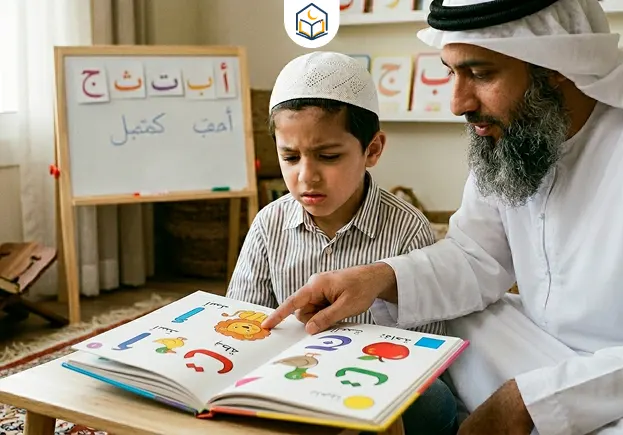
There’s a particular moment I see again and again in early lessons.
A child has memorised the shapes. They can sing the letters in order. They proudly say, “Alif, Baa, Taa…” without hesitation.

Many UK parents imagine something vague when they hear the phrase How Online Quran Classes Work. A child in front of a laptop. A teacher somewhere abroad. Perhaps reading a few verses. Maybe correcting mistakes.
But that picture is incomplete.
Flexible online Quran classes for kids and adults — taught by certified teachers in the UK.
Choose morning, evening, or weekend classes — whatever fits your routine.
Kids, adults, beginners, reverts — everyone is welcome.
Personalized lessons designed to match your goals.
Start with two free classes — no commitment needed.
