Flexible Scheduling
Choose morning, evening, or weekend classes — whatever fits your routine.

One of the most common misconceptions I see as a teacher is this: people think Tajweed is something “extra” — a decorative layer added after a child has already learned to read the Qur’an.
A parent will often say, “My son can read now. We’ll focus on Tajweed later.”
Or an adult learner might admit, “I just want to get through the surahs first. I’ll perfect pronunciation afterwards.”
This is exactly where confusion begins.
If you’ve ever wondered what is Tajweed and whether it’s truly necessary, the short answer is simple: Tajweed is the system of rules that ensures the Qur’an is pronounced correctly, letter by letter, sound by sound — exactly as it was revealed. And without it, meaning, clarity, and beauty can all be affected.
But the deeper answer is far more important — especially for children growing up in the UK, where Arabic is not the first language.
Let’s unpack it properly.
Tajweed comes from the Arabic root word “jawwada”, which means to improve or to make better. In Qur’an recitation, it refers to giving each letter its due rights:
In simple terms: Tajweed protects the sound of the Qur’an.
Without it, letters can change. And when letters change, meanings can change.
For example:
To an English speaker, they may sound similar. But in Arabic, they are completely different letters. Mixing them alters words.
This is why the importance of Tajweed is not about sounding “fancy” — it is about preserving accuracy.
The confusion often comes from how Tajweed is presented.
Many learners assume it is:
But in real teaching situations, Tajweed starts from the very first letter.
When a child learns “Ba” (ب), we don’t just teach the shape. We teach:
That is Tajweed.
When an adult learns how long to stretch a vowel in “Madd”, that is Tajweed.
It is not an “advanced course.” It is the foundation of correct reading.
This is where cause and effect become very clear.
And once fluency forms with mistakes, correction becomes much harder.
Many adult learners come back years later saying, “I’ve been reading for 10 years, but I just found out I pronounce certain letters incorrectly.”
Unlearning takes longer than learning properly from the beginning.
For children especially, this stage is critical. Young learners absorb sounds quickly. If pronunciation is corrected early, it becomes effortless. If not, they may struggle later — particularly when memorising.
There is a specific moment in learning when Tajweed either builds confidence or quietly damages it.
It usually appears after a child finishes Qaida and begins reading full surahs.
At this stage:
But subtle mistakes begin appearing.
Children often do not notice these themselves.
If no one corrects them consistently, they assume they are reading perfectly. Then one day, someone points out multiple mistakes at once — and confidence drops.
That is why Tajweed is not just technical. It protects emotional confidence too.
To really grasp the importance of Tajweed, we need to understand what it controls.
Every Arabic letter has a specific place in the mouth or throat where it originates.
Some letters come from:
If the articulation point shifts even slightly, the letter changes.
For non-Arabic speakers in the UK, throat letters like:
can feel unfamiliar. Without guided correction, they are often replaced with easier English sounds.
Some letters are:
These characteristics shape the tone of recitation.
When children are not taught these distinctions early, recitation sounds flat or rushed.
Some vowels must be stretched:
Stretching too little or too much affects rhythm and accuracy.
Think of it like musical timing — but precise and rule-based.
For families in Britain, Qur’an learning often fits around:
Because Arabic is not spoken daily at home for many children, pronunciation exposure is limited.
This means Tajweed must be:
It cannot rely on passive absorption.
That is also why many UK parents now prefer structured, one-to-one support instead of crowded weekend classes, where individual listening correction may be limited.
Many parents ask: “Can my child learn Tajweed through apps or videos?”
Here is the honest difference:
| Self-Learning | Guided Teaching |
| Learner hears general explanation | Teacher listens to exact pronunciation |
| Mistakes may go unnoticed | Immediate correction |
| Progress depends on self-awareness | Progress tracked systematically |
| No personal feedback | Personalised improvement plan |
Tajweed is auditory. It must be heard and corrected live.
In teaching environments where structured listening correction is part of the system, improvement becomes consistent rather than random.
For families exploring structured online quran recitation course this real-time correction is often what makes the biggest difference.
A question rarely asked is: When should a child move from basic reading to advanced Tajweed rules?
The answer is not based on age.
It depends on:
Rushing ahead to memorisation while pronunciation is unstable often leads to memorising mistakes.
Patience at this stage protects long-term fluency.
At Study Quran at Home, the approach is built around gradual, personalised progression. Qualified male and female teachers assess each student’s pronunciation level before advancing to new rules. Instead of overwhelming children with rule names, teachers correct practically during live one-to-one lessons.
Each learner follows a personalised curriculum, with progress tracking and milestone reviews. Parents in the UK appreciate the flexibility of scheduling around school hours, and the free trial lesson allows families to see how structured Tajweed support works before committing.
The goal is not speed. It is accuracy first — fluency second.
When Tajweed is taught correctly from the beginning:
Most importantly, children develop a respectful relationship with the Qur’an — understanding that every letter matters.
The beauty of Qur’an recitation is not accidental. It is preserved through precision.
If you are asking what is Tajweed, it likely means you care about getting it right.
That already matters.
Tajweed is not about perfection overnight. It is about consistent correction, careful listening, and gradual improvement.
Children do not struggle because they are incapable. They struggle because pronunciation requires guided ears.
Adults are not “too late.” They simply need structured progression rather than rushed reading.
When Tajweed is treated as the foundation — not an optional extra — everything else becomes easier.
And if you’re unsure where your child stands, starting with a calm assessment and a free trial lesson can give you clarity, reassurance, and a confident next step.
Learning the Qur’an properly is achievable. With patience, personalised teaching, and steady correction, progress is not only possible — it is inevitable.
Basic Tajweed — meaning correct pronunciation of letters — is essential to avoid changing meanings. Advanced decorative styles are not required for beginners, but correct articulation is necessary.
Tajweed should begin from the first stage of reading Arabic letters. Even young children can learn correct pronunciation naturally when guided early.
Yes. Many adults correct pronunciation successfully with structured feedback. It may take patience, but improvement is absolutely possible.
It depends on consistency and guidance. With regular lessons and correction, noticeable improvement can happen within months, but mastery develops gradually over time.
Memorisation should not begin seriously until basic pronunciation is stable. Otherwise, mistakes may become memorised and harder to correct later.
Begin your spiritual with personalized one-on-one classes from expert tutors.
Book a Free Trial Class
Learning Quran reading takes time, consistency, and proper guidance. This article explains realistic timelines for children and adults, the stages of Quran reading development, and how structured lessons and Tajweed correction help learners build confidence and fluency step by step.
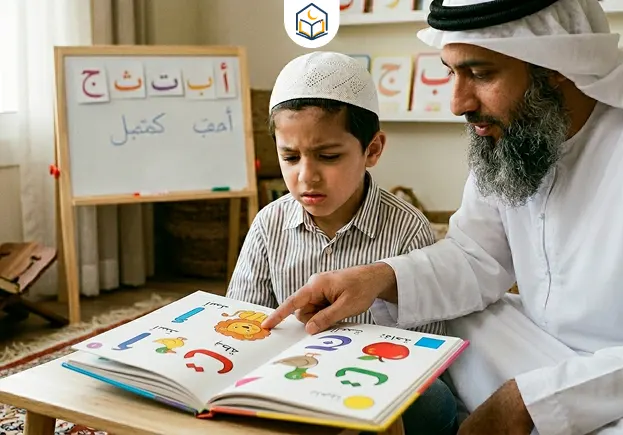
There’s a particular moment I see again and again in early lessons.
A child has memorised the shapes. They can sing the letters in order. They proudly say, “Alif, Baa, Taa…” without hesitation.
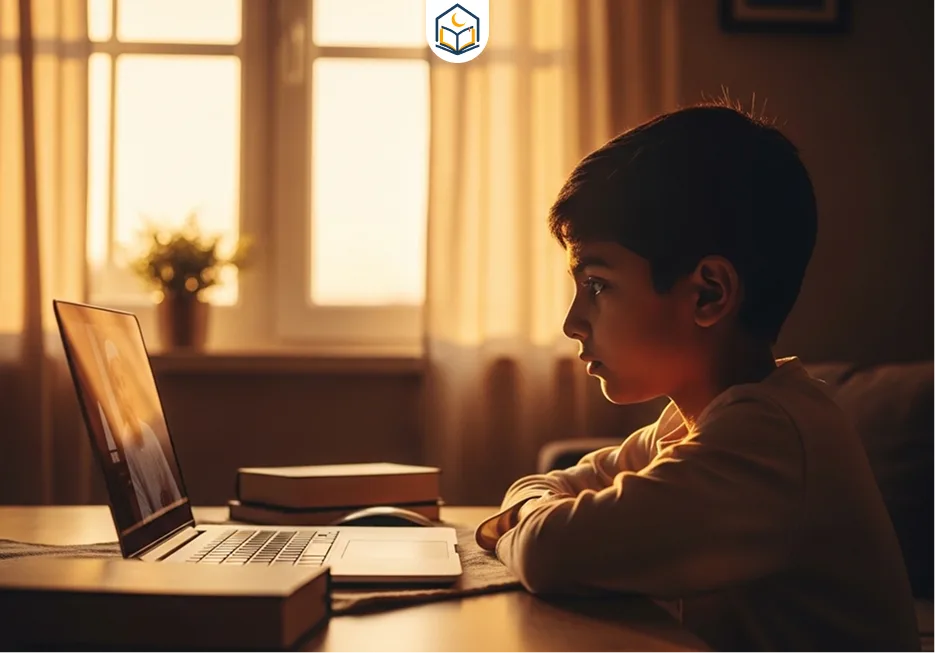
Many UK parents imagine something vague when they hear the phrase How Online Quran Classes Work. A child in front of a laptop. A teacher somewhere abroad. Perhaps reading a few verses. Maybe correcting mistakes.
But that picture is incomplete.
Flexible online Quran classes for kids and adults — taught by certified teachers in the UK.
Choose morning, evening, or weekend classes — whatever fits your routine.
Kids, adults, beginners, reverts — everyone is welcome.
Personalized lessons designed to match your goals.
Start with two free classes — no commitment needed.
