Flexible Scheduling
Choose morning, evening, or weekend classes — whatever fits your routine.

For many Muslims in the UK, Quran reading isn’t difficult because they lack motivation — it’s difficult because the language itself feels unfamiliar. Arabic has sounds that don’t exist in English, like ع، غ، ق، ض, and the way the tongue, throat, and lips move is completely different from how we use them in everyday English speech.
So naturally, many beginners — even adults who’ve been reading for years — struggle with things like:
And because most people learned as children without structured correction, these mistakes often stay with them for years.
If you’re a non-native Arabic speaker living in the UK, these challenges are completely normal — and totally fixable with the right approach.
Not all mistakes carry the same weight.
There are major mistakes (Lahn Jali) — the kind that can change the meaning of a word or verse.
For example, confusing ḥaa (ح) with haa (هـ), or changing a vowel so the grammar changes.
Then there are minor mistakes (Lahn Khafi) — subtle issues that don’t change the meaning but affect beauty, clarity, and proper tajweed, such as:
Understanding this difference helps you prioritise:
fix the meaning-changing mistakes first, then gradually refine the rest.
Before you can fix the common mistakes in Quran reading, you need to understand why they happen. Scholars divide Quran reading errors into two categories — and knowing the difference helps you correct the right things in the right order.
Lahn Jali refers to obvious, major mistakes — the kind that even someone with no tajweed knowledge can hear. They usually change the meaning of a word or the structure of a sentence.
Examples include:
These mistakes matter because they don’t just affect the sound — they affect the message. For example:
This is why correcting Lahn Jali is the first priority for anyone improving their recitation.
Why it matters for learners in the UK:
Most non-Arabic speakers learned Quran reading at a young age without structured pronunciation training. So some of these major mistakes become “normal habits” — but they’re actually the easiest to fix once you know where the problem is.
Lahn Khafi is the opposite: hidden, subtle mistakes that don’t change the meaning, but break tajweed rules and reduce the beauty and clarity of the recitation.
These include:
Think of Lahn Khafi as the “refinement stage”.
It doesn’t invalidate your reading, but it does stop you from reaching a confident, smooth recitation.
Why it’s common in the UK:
Many learners recite from memory without fully understanding tajweed. Others rely on community teachers who focus on memorisation more than pronunciation. So Lahn Khafi becomes widespread — but again, very fixable with the right guidance.
| Type of Mistake | What It Sounds Like | Does It Change Meaning? | Priority Level |
|---|---|---|---|
| Lahn Jali (Major) | Wrong letters, wrong vowels, wrong stops | Yes | Fix immediately |
| Lahn Khafi (Minor) | Weak ghunnah, incorrect Madd, light/heavy confusion | No | Improve gradually |
If you don’t know whether your mistake is major or minor, you’ll waste time correcting tiny details while missing the big issues.
Understanding the difference helps you:
This foundation will help you recognise and fix the most common mistakes in Quran reading in the next section.

Understanding mistakes is the first step — but recognising your own mistakes is what truly transforms your recitation. Most learners in the UK struggle with the same patterns, especially non-Arabic speakers, children, reverts, and adults who learned Quran at a young age without structured tajweed.
Here are the six most common mistakes in Quran reading — explained simply, with clear examples and practical ways to fix each one.
Arabic has pairs of letters that sound almost identical to English speakers but have completely different articulation points. This is easily the biggest reason behind common mistakes in Quran reading, especially for learners who grew up outside Arabic-speaking countries.
Commonly confused letters:
Why this mistake matters:
Even a small mispronunciation can change the meaning — sometimes drastically.
How to fix it:
This one improvement alone can transform your confidence.
One of the easiest mistakes to make — and spot. Madd is the stretching of sound for 2, 4–5, or 6 counts depending on the rule.
Common errors:
Why this matters:
Madd is what gives Quran recitation its rhythm and structure — breaking it makes reading sound rushed or flat.
How to fix it:
Ghunnah is the nasal sound produced in words like inna, thumma, mimma.
Most beginners either shorten it too much or pronounce it with no nasal vibration.
Common errors:
How to fix it:
Think of Ghunnah as the “signature sound” of tajweed — when it’s correct, recitation instantly sounds smoother.
This is one of the most overlooked common mistakes in Quran reading — and one of the most serious. Many learners stop randomly because they need to breathe, not realising some stops distort the meaning completely.
Example:
Stopping after “لَا” in “لَا رَيْبَ فِيهِ” gives an incorrect meaning.
Why this matters:
Stopping mid-phrase breaks grammar, structure, and meaning.
How to fix it:
A small improvement in Waqf brings a huge improvement in clarity.
The Quran wasn’t meant to be rushed through — yet many people read as if they’re trying to finish quickly.
What fast reading causes:
How to fix it:
Remember:
One page with correct tajweed > five rushed pages with mistakes.
These tajweed rules confuse a lot of learners because they’re not visible in English-based languages. And because they apply across many words, they’re among the most common mistakes in Quran reading.
Common problems:
How to fix it:
These rules get much easier once you practise them daily in small doses.
| Mistake | Why It Happens | Impact | Quick Fix |
|---|---|---|---|
| Mispronouncing letters | English tongue habits | Changes meaning | Learn makharij + minimal pairs |
| Incorrect Madd | Not counting beats | Breaks tajweed rhythm | 2, 4–5, 6 rule |
| Weak Ghunnah | No nasal control | Sounds flat | 2-count nasal vibration |
| Wrong Waqf | Running out of breath | Meaning distortion | Learn stop symbols |
| Reading too fast | Trying to finish quickly | Hidden mistakes | Slow pace + breath control |
| Noon/Meem mistakes | Confusing rules | Breaks flow | Learn rules step-by-step |
Knowing the common mistakes in Quran reading is half the journey.
The real change happens when you learn how to fix them — in a simple, consistent, and realistic way that fits busy UK life.
Here are the most effective, practical steps that actually work for real learners.
Most mistakes come from rushing. When you slow your pace, you naturally:
Practical exercise:
Choose any short Surah (like Al-Asr or Al-Falaq).
Read it once at your “normal speed”, then once at half that speed.
You’ll instantly hear the difference — and spot mistakes you never noticed before.
Breathing tip:
If you often lose breath mid-verse, it’s not because the verse is long — it’s because the pace is fast.
Try inhaling deeply at natural pauses and avoid stopping on words with incomplete meanings.
Your ear is your best tajweed teacher — if you train it.
Choose a clear reciter like:
Here’s a powerful technique:
This process alone corrects many mistakes without needing instruction — because once your ear recognises the correct sound, your tongue begins to follow naturally.
Most learners think they’re reading correctly… until they hear themselves.
Recording reveals:
Weekly challenge:
Record one minute of your recitation every week.
Save each recording.
After a month, compare week 1 to week 4 — the improvement will surprise you.
Self-recording is one of the habits shared by students who improve the fastest.
Some mistakes are simple…
But others — like subtle letter differences, Ghunnah depth, Waqf precision — are almost impossible to detect alone.
This is where structured correction makes a massive difference.
Joining online quran recitation course gives you:
Even one weekly class can correct mistakes you’ve held for years — because tajweed is an “applied skill”, not just theory.
Many UK learners say they improved more in 2 months of guided correction than in 5–6 years of self-practice.
Consistency beats intensity.
Instead of aiming for 10 pages a day, aim for 5–10 minutes of quality practice.
Here’s a simple routine that works for nearly everyone:
If you keep this up for 30 days, you will hear a noticeable difference in clarity, rhythm, and confidence.
Improving your Quran recitation doesn’t require hours of study or complicated routines. What actually works — especially for learners juggling work, family, and school in the UK — is a simple, consistent approach.
Below are practical, easy-to-follow habits that help you build real progress over time.
Most people struggle not because tajweed is difficult, but because they practise in short “bursts” instead of building a steady rhythm.
A 10-minute daily routine beats a 1-hour session once a week — always.
Here’s a routine that works extremely well:
It’s simple, light, and sustainable — and your improvement becomes noticeable within weeks.
A few practical tools can dramatically reduce the most common mistakes in Quran reading:
Highlights Madd, Ghunnah, Qalqalah, and stopping places.
Your eyes learn the rules even before your brain memorises them.
Such as:
These tools help you correct mistakes instantly, especially when practising alone.
Listening to slow-paced reciters trains your ear to recognise proper rhythm, pronunciation, and stopping points.
This combination — visual support + digital tools + audio model — makes recitation much easier, even for complete beginners.
Almost every learner reaches a point where progress slows down.
This usually means you need personalised correction, not more self-practice.
This is where online quran recitation course become extremely useful:
Many UK learners working full-time find that one weekly online session is enough to break through plateaus and correct mistakes they’ve had for years.
If you’ve been practising alone and feel like you’re not improving, that’s a sign you need guided correction.
Improvement is much easier to see when you track it.
Try this:
Even subtle changes — clearer S sounds, stronger Ghunnah, smoother Waqf — motivate you to keep going.
Begin your spiritual with personalized one-on-one classes from expert tutors.
Book a Free Trial Class
Learning Quran reading takes time, consistency, and proper guidance. This article explains realistic timelines for children and adults, the stages of Quran reading development, and how structured lessons and Tajweed correction help learners build confidence and fluency step by step.
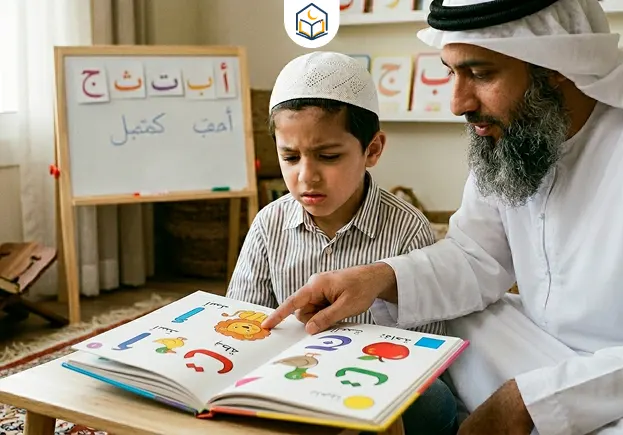
There’s a particular moment I see again and again in early lessons.
A child has memorised the shapes. They can sing the letters in order. They proudly say, “Alif, Baa, Taa…” without hesitation.

Many UK parents imagine something vague when they hear the phrase How Online Quran Classes Work. A child in front of a laptop. A teacher somewhere abroad. Perhaps reading a few verses. Maybe correcting mistakes.
But that picture is incomplete.
Flexible online Quran classes for kids and adults — taught by certified teachers in the UK.
Choose morning, evening, or weekend classes — whatever fits your routine.
Kids, adults, beginners, reverts — everyone is welcome.
Personalized lessons designed to match your goals.
Start with two free classes — no commitment needed.
