Flexible Scheduling
Choose morning, evening, or weekend classes — whatever fits your routine.

Learning Quran reading is very different from reading English or other familiar languages.
Arabic has its own alphabet, sounds, and reading rules.
For beginners—especially non-Arabic speakers—this can feel confusing at first.
Quran reading is not just about recognising letters on a page.
These factors explain why common Quran reading mistakes beginners make are usually related to pronunciation, speed, and misunderstanding Arabic reading rules.
Many beginners assume that if they can “sound out” the words, they are reading correctly.
In reality, small pronunciation errors can change a word entirely.
This is why learning step by step is essential.
Another key point beginners often miss is that Quran recitation is a skill developed over time.
It is normal to struggle at the beginning.
Difficulty does not mean failure—it usually means the learner needs clearer guidance and more structured practice.
From real teaching experience, certain Quran reading mistakes appear again and again among beginners.

Arabic letters have sounds that do not exist in English.
Letters such as ع (Ayn), ح (Haa), ص (Saad), and ض (Daad) are especially difficult.
Beginners often replace them with the closest English sound, which leads to incorrect reading.
Many learners rush because they want to “get through” the verse.
This causes:
When unsure, beginners often guess the pronunciation instead of asking or revisiting the rule.
Over time, this creates habits that are difficult to fix.
Short vowels (fatha, kasra, damma) are small but critical.
Ignoring them leads to reading Quran incorrectly, even if the letters are correct.
Self-study alone often means mistakes go unnoticed.
Many learners repeat the same error for months simply because no one corrected it.
The table below highlights common Quran reading mistakes beginners make compared to the correct learning approach recommended by experienced teachers
| Common Mistake | Correct Approach |
|---|---|
| Reading quickly to finish | Reading slowly with focus |
| Replacing Arabic sounds with English ones | Learning each letter’s correct sound |
| Skipping basics | Mastering letters before moving on |
| Relying only on listening | Reading with correction |
These tips come directly from real learning situations, not theory.
Do not try to perfect pronunciation, speed, and melody all at once.
Beginners should focus first on clear letter sounds.
Silent reading hides mistakes.
Reading aloud makes pronunciation issues visible and correctable.
Repeating one line correctly is better than finishing a full page incorrectly.
Consistency matters more than quantity.
Correction is part of learning Quran reading.
Many learners feel discouraged when corrected, but correction is guidance, not criticism.
Correct pronunciation is physical—it involves the tongue, throat, and lips.
Regular short practice sessions work better than long, irregular ones.
Tajweed simply means reading the Quran as it was revealed—clearly and correctly.
Beginners do not need to memorise complex rules, but understanding why mistakes happen helps prevent them.
Many Quran recitation mistakes beginners make are not due to ignoring Tajweed intentionally, but because pronunciation foundations were skipped too early.
Skipping pronunciation foundations often leads learners to feel “stuck” later.
Many struggle because they move forward before these basics settle.
In structured learning environments like Online Quran Classes, learners benefit from live correction, clear progression, and personal feedback.
Instead of guessing, students know immediately when something is wrong and how to fix it. Structure prevents bad habits and supports steady improvement without rushing.
| Aspect | Self-Study | Guided Learning |
| Error correction | Often missed | Immediate |
| Progress clarity | Unclear | Step-by-step |
| Confidence | Easily shaken | Gradually built |
In learning platforms such as Study Quran at Home, the focus is placed on correcting Quran reading from the very first step, especially for beginners and non-Arabic speakers.
This kind of guided learning helps learners notice and fix mistakes early, before they turn into habits that are difficult to correct later.
If Quran reading feels confusing or overwhelming, that usually means the foundation needs strengthening—not that you are incapable.
Learning with calm guidance, clear steps, and patient correction can make the process far more reassuring.
Progress in Quran recitation is meant to feel steady, not rushed.
This depends on consistency and guidance.
Most beginners see clear improvement within weeks when practising regularly with feedback.
Mistakes are expected at the beginning.
What matters is making effort to learn and improve, not remaining unaware of errors.
Beginners should learn pronunciation basics first.
Tajweed rules make more sense once letters and sounds are stable.
Absolutely. Many adult learners progress very well with patience, structure, and regular practice.
Most common Quran reading mistakes beginners make are not signs of failure, but signs that structured guidance is needed.
Begin your spiritual with personalized one-on-one classes from expert tutors.
Book a Free Trial Class
Learning Quran reading takes time, consistency, and proper guidance. This article explains realistic timelines for children and adults, the stages of Quran reading development, and how structured lessons and Tajweed correction help learners build confidence and fluency step by step.
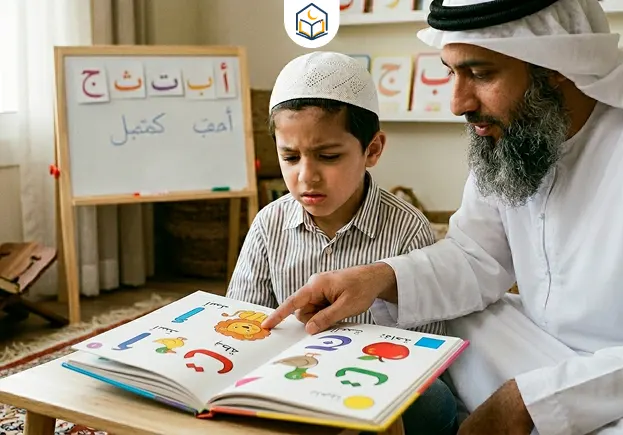
There’s a particular moment I see again and again in early lessons.
A child has memorised the shapes. They can sing the letters in order. They proudly say, “Alif, Baa, Taa…” without hesitation.

Many UK parents imagine something vague when they hear the phrase How Online Quran Classes Work. A child in front of a laptop. A teacher somewhere abroad. Perhaps reading a few verses. Maybe correcting mistakes.
But that picture is incomplete.
Flexible online Quran classes for kids and adults — taught by certified teachers in the UK.
Choose morning, evening, or weekend classes — whatever fits your routine.
Kids, adults, beginners, reverts — everyone is welcome.
Personalized lessons designed to match your goals.
Start with two free classes — no commitment needed.
