Flexible Scheduling
Choose morning, evening, or weekend classes — whatever fits your routine.

One of the biggest misconceptions I hear from parents is this:
“Is it just reading over Zoom?”
Not quite.
In reality, structured online Quran learning is far more organised — and in many cases, more focused — than traditional group settings. Especially when it is delivered one-to-one.
Let’s walk through what actually happens behind the screen, step by step, so you can understand the full process — not just the surface.
At its core, online Quran learning is:
It is not pre-recorded videos.
It is not random reading.
And it is not self-study with occasional checking.
The teacher listens in real time, corrects pronunciation immediately, explains rules clearly, and builds progress week by week.
But to understand how it truly works, we need to look at the structure inside each lesson.
A structured session usually follows a learning rhythm rather than a rigid script.
Every good lesson begins with revision.
Why?
Because Quran learning depends heavily on memory retention and pronunciation consistency. If revision is skipped, mistakes quietly settle in.
The teacher:
This stage builds confidence before moving forward.
A common misunderstanding is that faster is better.
It isn’t.
In structured online classes, new material is introduced gradually:
Why small portions?
Because pronunciation accuracy weakens when learners are overloaded. Children especially may begin guessing sounds instead of articulating properly.
Controlled progression prevents this.
This is where many parents are surprised.
Online Quran learning is heavily based on active listening. The teacher is not just watching the student read — they are listening for:
Correction happens instantly.
In fact, many learners improve faster online because the teacher’s full attention is on one student — not divided among a class.
Here’s something I often explain to UK parents:
The challenge isn’t technology.
It’s unfamiliar structure.
Many children are used to:
When they move to one-to-one learning, they suddenly become fully responsible for reading. There’s no hiding behind others.
This can feel uncomfortable at first.
But that discomfort is actually growth.
Struggle at the beginning is not a red flag. It’s often a sign that real learning has started.
Another hidden misconception is that online learning means “less real”.
But in practice, tools often enhance focus.
Teachers use:
Sessions are live, interactive, and monitored.
For UK families balancing school runs, homework, and weekend activities, this flexibility matters. Lessons can be scheduled around after-school routines without travel time or fatigue.
The structure stays intact — but the setting is home.
Some adults ask:
“Can’t I just use YouTube or an app?”
Let’s look at the difference clearly.
| Self-Learning | Guided One-to-One Learning |
| No live correction | Immediate pronunciation correction |
| Easy to skip revision | Structured revision built in |
| Hard to track progress | Clear learning milestones |
| Confusion about Tajweed rules | Step-by-step explanation |
| Motivation fluctuates | Teacher accountability |
Many learners think they’re progressing — until someone listens closely and identifies errors that have become habits.
And once pronunciation habits settle incorrectly, they are harder to fix later.

This is one of the most important parts of how online quran recitation course work.
Progression is not based on:
It is based on stability.
A learner moves forward when:
Rushing ahead often leads to:
Structured progression protects the foundation.
In serious programmes, progress is documented.
Tracking includes:
Parents in the UK often appreciate this transparency. It replaces guesswork with visible milestones.
Instead of asking, “Are they improving?”, you can see exactly where they are.
Not all learners start at the same point.
Some children:
Adults often feel embarrassed about starting from scratch.
A personalised curriculum means:
At Study Quran at Home, this personalised approach is central. Lessons are one-to-one with qualified male and female teachers, following a structured pathway tailored to the learner’s level. Progress is monitored carefully, and families are offered a free trial lesson to understand the approach before committing. The focus is not speed — it is stable, confident recitation.
This structure ensures children are not compared to others. They move according to readiness.
The British Muslim community often faces unique scheduling pressures:
Online sessions remove travel and waiting time.
More importantly, they allow:
Consistency is one of the biggest factors in Quran progress. Even small gaps disrupt fluency development.
There is always a stage where learners move from “decoding” to “flow”.
This happens when:
Many learners plateau just before this stage.
Why?
Because they try to read faster instead of reading correctly.
In teaching situations, I often slow students down deliberately. Accuracy first. Speed comes later.
Skipping this step creates fragile fluency.
It’s common to think:
“If my child is finishing pages quickly, they’re doing well.”
But finishing pages and improving recitation are not the same.
Signs of real improvement include:
Online classes allow teachers to detect subtle improvement because of uninterrupted listening.
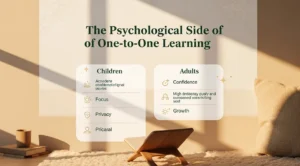
There’s something powerful about individual attention.
Children:
Adults:
This environment supports both skill and confidence building.
Many parents ask:
“What happens after my child can read properly?”
At that point, the learning path usually transitions into:
Each stage builds on the previous one.
Skipping stages weakens the structure.
This is why structured programmes matter more than random reading practice.
To summarise clearly:
They work because they combine:
They are not shortcuts.
They are structured environments.
If you are exploring options, understanding how online quran recitation course function within a guided framework can help you choose a learning path that prioritises accuracy over speed.
Yes, if sessions are structured and interactive. Short, focused lessons with revision help children stay engaged and build confidence gradually.
Most learners show noticeable pronunciation improvement within a few weeks, especially when lessons are consistent and revision is taken seriously.
Yes. In one-to-one settings, teachers focus closely on articulation, elongation, and rule application — often more closely than in group environments.
A stable internet connection, a device with audio capability, and a quiet space are usually enough. No complex software is required.
Absolutely. Many adults begin later in life. A personalised plan allows them to start comfortably without pressure.
If you’ve been unsure about how online quran recitation course work, know this:
They are not casual reading sessions.
They are structured, attentive, and carefully guided learning journeys.
Mistakes are normal.
Slow progress is normal.
Early hesitation is normal.
What matters is consistent correction and patient progression.
With the right support, children and adults in the UK can build strong pronunciation, steady recitation fluency, and lasting confidence — step by step.
If you’re considering structured support, starting with a free trial lesson can give you clarity and reassurance. Sometimes seeing the process in action removes more doubt than any explanation ever could.
Begin your spiritual with personalized one-on-one classes from expert tutors.
Book a Free Trial Class
Learning Quran reading takes time, consistency, and proper guidance. This article explains realistic timelines for children and adults, the stages of Quran reading development, and how structured lessons and Tajweed correction help learners build confidence and fluency step by step.
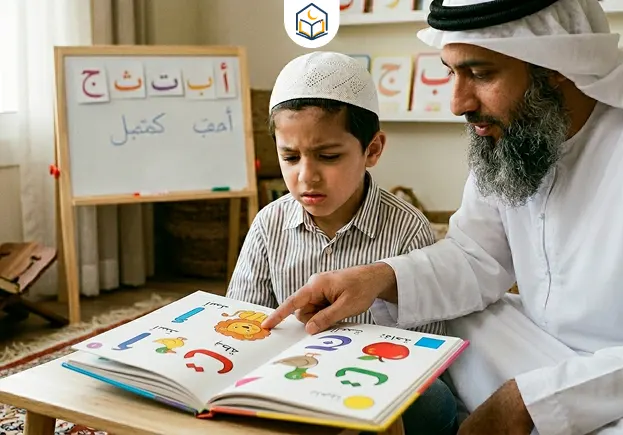
There’s a particular moment I see again and again in early lessons.
A child has memorised the shapes. They can sing the letters in order. They proudly say, “Alif, Baa, Taa…” without hesitation.
Many UK parents imagine something vague when they hear the phrase How Online Quran Classes Work. A child in front of a laptop. A teacher somewhere abroad. Perhaps reading a few verses. Maybe correcting mistakes.
But that picture is incomplete.
Flexible online Quran classes for kids and adults — taught by certified teachers in the UK.
Choose morning, evening, or weekend classes — whatever fits your routine.
Kids, adults, beginners, reverts — everyone is welcome.
Personalized lessons designed to match your goals.
Start with two free classes — no commitment needed.
