Flexible Scheduling
Choose morning, evening, or weekend classes — whatever fits your routine.

It wasn’t a sceptical question. It was a protective one.
She had tried weekend madrasa. She had tried self-study apps. Her son could recognise some letters, but his pronunciation was inconsistent and his confidence was fragile. She didn’t want convenience. She wanted progress.
So let’s address this clearly and honestly.
Yes — online Quran classes can be very effective.
But only when they are structured properly, guided by qualified teachers, and designed around how children actually learn.
The real difference isn’t “online vs in-person.”
It’s structured teaching vs unstructured exposure.
Do online Quran classes work?
They work when:
They don’t work well when:
The method matters more than the medium.
Many UK parents associate screens with distraction. That concern is valid. But in learning contexts, the issue isn’t the screen — it’s the design of the lesson.
In teaching situations, I’ve noticed something important:
Children lose focus when:
But when the session is interactive — when the teacher calls the child by name, listens carefully, corrects gently, and progresses step by step — attention improves dramatically.
Online learning becomes effective because:
The medium becomes secondary. The interaction becomes primary.
Many parents who ask “is learning Quran online effective?” are reacting to one of three experiences:
Large online groups often mirror classroom problems:
Effect: Progress slows. Confidence drops.
Apps can support learning — but they cannot:
Effect: Children memorise incorrectly and build weak pronunciation habits.
If lessons lack structure, learners jump:
Effect: Confusion and frustration.
So when someone asks, “Do online Quran classes work?”
Often what they mean is:
“Can they work better than what we’ve already tried?”
The answer depends on structure.
For children especially, effectiveness depends heavily on recognising which stage they are in.
The goal is clarity of sound, not speed.
Rushing here creates long-term pronunciation errors.
This is where many children stumble.
They can recognise letters but hesitate when combining them.
Without patient repetition and listening correction, confidence drops quickly.
Here, rhythm and flow begin to form.
If Tajweed is ignored at this stage, bad habits become permanent.
Memorising without correct pronunciation creates future correction work.
Online classes become effective when teachers:
Skipping stages is one of the biggest causes of ineffective learning — online or offline.
British Muslim families often juggle:
Children are mentally tired by the evening. If Quran learning feels heavy or rushed, resistance grows.
This is where flexible scheduling and shorter focused sessions can actually make online learning more effective than traditional settings.
A calm 30-minute personalised session after Maghrib can achieve more than a distracted two-hour group class.
The issue isn’t commitment.
It’s energy management.
Let’s break this down clearly:
→ Effect: Faster pronunciation correction
→ Effect: Improved recitation fluency
→ Effect: Confidence building
→ Effect: Habit formation
→ Effect: Long-term love for Quran
When these elements exist, learning Quran online becomes not just effective — but deeply transformational.
To be balanced, we should acknowledge situations where it does not work well.
Online Quran learning struggles when:
Technology is a tool. Without skill, tools lose value.
But when supported properly, it becomes powerful.
Here’s where many adults ask:
“Can’t I just learn myself from YouTube?”
Self-study offers flexibility.
But it lacks correction.
| Self-Learning | Guided Structured Learning |
| No pronunciation feedback | Real-time listening correction |
| Risk of repeating mistakes | Mistakes corrected immediately |
| No learning milestones | Clear step-by-step progression |
| Motivation depends on self-discipline | Built-in accountability |
Many learners only realise pronunciation errors years later.
Guided learning prevents that.
Structured support — even through online quran recitation course — allows learners to build accuracy from the beginning rather than undo mistakes later.
At Study Quran at Home, lessons are designed around structured progression rather than casual sessions. Each student follows a personalised curriculum based on their level, whether they are a child beginner or an adult returning to learning.
Qualified male and female teachers focus on pronunciation accuracy, recitation fluency, and confidence building. Progress is tracked carefully, and parents receive clear updates. There is also a free trial lesson so families can see how the teaching style works before committing.
The aim isn’t speed.
It’s stable, long-term improvement.
If you are considering it for your child (or yourself), focus on these practical elements:
Know the learner’s real level. Do not assume.
Makharij mistakes must be addressed early.
Fluency first. Memorisation second.
Routine builds comfort.
Confidence fuels fluency.
Choose lesson times wisely within UK schedules.
When these factors align, online learning becomes highly productive.
We often measure effectiveness in:
But real effectiveness looks like:
These outcomes matter more than speed.
Yes — more than ever.
With improved technology, structured teaching systems, safeguarding awareness in the UK, and personalised scheduling, online Quran learning can provide:
But effectiveness depends on how it’s delivered, not simply that it’s delivered online.
Yes, if sessions are short, interactive, and one-to-one. Younger children need engagement and correction, not passive listening.
Absolutely. Adults often benefit even more because they value structured learning and can focus better during sessions.
It can be, especially when personalised. One-to-one attention often accelerates pronunciation correction and fluency.
Most learners show noticeable improvement in pronunciation and confidence within a few months of consistent lessons.
Qualified teachers, structured curriculum, listening correction, and steady progression.
If you are asking whether online Quran classes are effective, it means you care deeply about doing this properly.
That already matters.
Learning the Quran is not about rushing through pages. It is about building correct pronunciation, steady fluency, and a confident relationship with the Book of Allah.
With personalised guidance, patient teaching, and structured progression, real improvement is absolutely achievable.
If you’d like to explore whether this approach suits your family, a free trial lesson allows you to experience the teaching style first-hand — calmly, without pressure.
Progress is possible.
With the right structure, it becomes natural.
Begin your spiritual with personalized one-on-one classes from expert tutors.
Book a Free Trial Class
Learning Quran reading takes time, consistency, and proper guidance. This article explains realistic timelines for children and adults, the stages of Quran reading development, and how structured lessons and Tajweed correction help learners build confidence and fluency step by step.
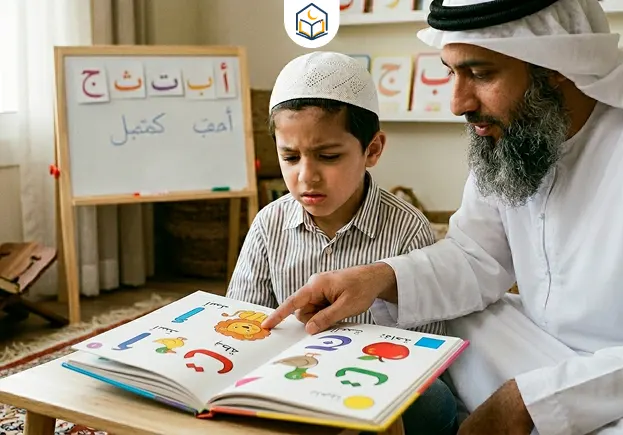
There’s a particular moment I see again and again in early lessons.
A child has memorised the shapes. They can sing the letters in order. They proudly say, “Alif, Baa, Taa…” without hesitation.

Many UK parents imagine something vague when they hear the phrase How Online Quran Classes Work. A child in front of a laptop. A teacher somewhere abroad. Perhaps reading a few verses. Maybe correcting mistakes.
But that picture is incomplete.
Flexible online Quran classes for kids and adults — taught by certified teachers in the UK.
Choose morning, evening, or weekend classes — whatever fits your routine.
Kids, adults, beginners, reverts — everyone is welcome.
Personalized lessons designed to match your goals.
Start with two free classes — no commitment needed.
