Flexible Scheduling
Choose morning, evening, or weekend classes — whatever fits your routine.

In almost every class I teach, there comes a quiet moment. A learner finishes reciting, looks up confidently… and I gently say, “Let’s read that word again.”
This is where most common Tajweed mistakes begin — quietly, repeatedly, and without the learner even realising.
Not because they cannot read.
Not because they are careless.
But because small pronunciation errors slowly turn into habits.
If you are a parent in the UK listening to your child read Qur’an, or an adult trying to improve your recitation, you may be asking:
The answer is simple: Tajweed mistakes are not just about rules — they are about awareness, correction, and consistent guidance.
Tajweed mistakes refer to errors in the pronunciation, articulation, or application of Quran recitation rules.
These mistakes usually happen in:
Even small errors can affect:
Learners often pronounce letters from the wrong place in the mouth or throat.
Examples include:
This is one of the most serious mistakes because it changes the sound completely.
Some letters must be pronounced with heaviness (tafkhīm), while others must remain light.
Common issue:
This distorts the balance of recitation.
Madd is one of the most misunderstood Tajweed rules.
Common problems:
Result: broken rhythm and unnatural flow.
Ghunnah (nasal sound) is often:
This affects the melody and smoothness of recitation.
Rules like:
Are often memorised but incorrectly applied.
This leads to:

Learners often think progress = reading faster.
But:
Speed hides mistakes instead of fixing them.
Without listening to correct recitation:
Listening is essential for improvement.
One of the most overlooked causes of Tajweed mistakes is muscle memory.
When a mistake is repeated:
Tajweed is not just knowledge — it is physical training.
Many learners rely only on repetition.
But repetition without correction reinforces mistakes.
For example:
This is why structured learning is essential.
Instead of learning alone, many students improve faster when they follow a guided system such as an online quran recitation course , where a qualified teacher listens, corrects, and adjusts mistakes in real time.
This approach helps learners:
Reduce your speed by at least 30%.
Accuracy always comes before fluency.
Practice difficult letters daily:
This builds self-awareness.
Do not fix everything at once.
This is the fastest way to improve.
Do not move to memorisation if:
Memorisation without correction strengthens mistakes.
Many learners feel frustrated when corrected repeatedly.
But correction is not criticism — it is refinement.
With proper guidance:
If ignored:
If corrected early:
Every learner makes Tajweed mistakes.
The difference lies in how early they are corrected.
With:
Improvement becomes natural and achievable.
It depends on consistency. Minor mistakes may improve within weeks, while deeper habits may take a few months.
Children usually need guidance, as they cannot easily detect subtle pronunciation differences.
Not at all. Adults often improve faster due to better understanding and focus.
No. Correct pronunciation should come first.
Listen for:
Begin your spiritual with personalized one-on-one classes from expert tutors.
Book a Free Trial Class
Learning Quran reading takes time, consistency, and proper guidance. This article explains realistic timelines for children and adults, the stages of Quran reading development, and how structured lessons and Tajweed correction help learners build confidence and fluency step by step.
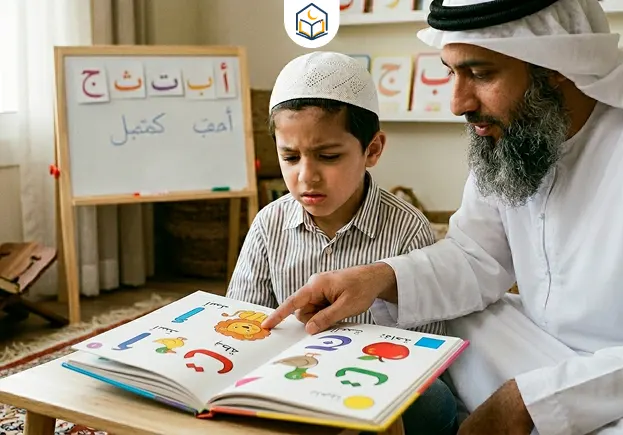
There’s a particular moment I see again and again in early lessons.
A child has memorised the shapes. They can sing the letters in order. They proudly say, “Alif, Baa, Taa…” without hesitation.

Many UK parents imagine something vague when they hear the phrase How Online Quran Classes Work. A child in front of a laptop. A teacher somewhere abroad. Perhaps reading a few verses. Maybe correcting mistakes.
But that picture is incomplete.
Flexible online Quran classes for kids and adults — taught by certified teachers in the UK.
Choose morning, evening, or weekend classes — whatever fits your routine.
Kids, adults, beginners, reverts — everyone is welcome.
Personalized lessons designed to match your goals.
Start with two free classes — no commitment needed.
