Flexible Scheduling
Choose morning, evening, or weekend classes — whatever fits your routine.
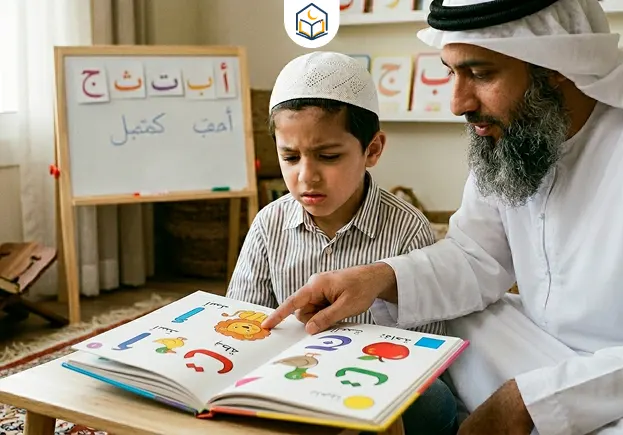
Then I ask them to read a simple word from the Quran.
And suddenly — silence.
This is the stage where the Arabic Alphabet for Quran Reading stops being a chant and starts becoming a skill. For many children (and even adults), this is the exact point where confusion begins.
If you’re a parent helping your child learn, understanding this stage will make all the difference.
Let’s answer the most important question clearly:
The Arabic alphabet for Quran reading is not just about recognising 29 letters.
It is about learning:
In Quran reading, every letter has weight. A slight change in sound can change meaning entirely. That’s why learning the alphabet properly is not a small step — it is the foundation of everything that follows.
When this stage is rushed, fluency becomes shaky later on.
This is one of the biggest beginner frustrations.
Many children in the UK attend weekend classes or use apps at home. They memorise the alphabet quickly. Parents feel relieved. Progress seems visible.
But then reading doesn’t flow.
Why?
Because there’s a hidden difference between:
Children see the shape and say the name.
Children see the shape and produce the correct sound instinctively.
These are two completely different learning milestones.
In teaching situations, I often notice that a child who knows all 29 letters still hesitates when combining just three letters into one word. The reason is simple: the brain has not yet connected symbol to sound automatically.
That connection takes structured repetition — not just memorisation.
Arabic contains sounds that do not exist in English.
This is where many beginners — especially children raised in Britain — hit a wall.
Letters such as:
require mouth and throat positions unfamiliar to English speakers.
If a child learns incorrect pronunciation early:
Children often feel frustrated because they think they are “reading wrong”, when in reality they were never shown how to pronounce Arabic letters properly in the first place.
Pronunciation accuracy must begin at alphabet stage — not after.
The key is not complexity.
The key is isolation → repetition → correction → integration.
Focus on one letter at a time.
Not its name — its sound.
For example:
Children learn faster when they understand physically what to do.
For example:
Without visual and listening correction, children guess — and guessing builds incorrect habits.
Long drills create boredom.
Short, focused repetition builds retention.
Only after the sound is stable should it appear inside a word.
This step-by-step progression builds reading confidence gradually instead of overwhelming the learner.
In many informal setups, children are pushed quickly from alphabet charts to full Quran pages.
This creates three problems:
Reading Quran is not about speed.
It is about clarity first.
When alphabet mastery is skipped or rushed:
Structured progression prevents this domino effect.
Many UK parents try teaching at home — especially after school hours when schedules are tight.
While this effort is admirable, there is a common limitation: listening correction.
A child may:
Without trained feedback, these errors go unnoticed.
Over time, small errors stack.
In structured learning environments — including carefully guided online quran recitation course — teachers focus heavily on listening correction at the alphabet stage because this is where pronunciation habits are formed.
Early correction prevents later struggle.
This is an important question many parents ask.
A child is ready to move forward when:
If hesitation remains frequent, more reinforcement is needed.
Moving forward too early creates long-term reading instability.
Progress in Quran learning is not about finishing a book quickly — it is about building recitation fluency that lasts.
At Study Quran at Home, the early alphabet stage is treated as a serious learning milestone — not a quick introduction.
Children are guided through:
Qualified male and female teachers adjust pace based on each child’s readiness. This avoids comparison pressure and builds genuine confidence. Parents can also begin with a free trial lesson to observe how structured progression works before committing.
The difference is not speed — it is stability.
For many British Muslim families, Quran lessons fit around:
Children are often mentally tired after school. If alphabet lessons are long or rushed, focus drops.
This is why shorter, focused sessions with clear milestones work better.
A healthy progression looks like this:
Each stage supports the next.
Skipping one creates gaps later.
Children rarely say, “I don’t understand blending.”
Instead, they say:
“I’m bad at this.”
Alphabet confusion affects confidence quickly.
When letters don’t flow smoothly:
But when sounds are stable:
The Arabic alphabet for Quran reading is not just a technical stage — it is the emotional foundation of the child’s Quran journey.
Even without formal teaching experience, parents can support effectively.
Here’s how:
Encourage your child to repeat sounds slowly. Avoid interrupting constantly.
Five minutes of accurate pronunciation is better than 30 rushed minutes.
Every child reaches fluency at a different pace.
Reinforcement builds automatic recall.
Silent recognition does not build pronunciation strength.
Consistency matters more than intensity.
Many assume alphabet learning is simple because it is the beginning.
In reality, it is the most delicate stage.
Everything that follows — Tajweed, memorisation, fluency — rests on:
When the foundation is stable, recitation flows naturally later.
When the foundation is rushed, correction becomes harder year after year.
For children, it usually takes several weeks to a few months to master pronunciation properly. Recognition may come quickly, but sound accuracy takes longer and should not be rushed.
Because recognising letter names is different from blending sounds. Reading requires automatic sound recall and smooth connection between letters.
Yes. Throat letters and heavy (emphatic) letters are usually more difficult because these sounds do not exist in English.
Basic sound correctness should begin immediately. Advanced Tajweed rules come later, but pronunciation accuracy must start from the beginning.
You can support practice at home, but trained listening correction is very important. Small pronunciation errors are easy to miss without experience.
If your child seems stuck at the alphabet stage, it does not mean they are slow.
It usually means they need:
The Arabic Alphabet for Quran Reading is not just the first step — it is the step that shapes every other stage.
With the right pace, consistent support, and proper guidance, fluency becomes achievable.
And once fluency begins, confidence follows naturally.
If you would like your child to build this foundation with personalised support, qualified teachers, and a clear step-by-step plan, you can start with a free trial lesson and see how structured learning feels in practice.
Every confident reciter once paused at the alphabet.
What matters is how that pause is guided.
Begin your spiritual with personalized one-on-one classes from expert tutors.
Book a Free Trial Class
Learning Quran reading takes time, consistency, and proper guidance. This article explains realistic timelines for children and adults, the stages of Quran reading development, and how structured lessons and Tajweed correction help learners build confidence and fluency step by step.
There’s a particular moment I see again and again in early lessons.
A child has memorised the shapes. They can sing the letters in order. They proudly say, “Alif, Baa, Taa…” without hesitation.

Many UK parents imagine something vague when they hear the phrase How Online Quran Classes Work. A child in front of a laptop. A teacher somewhere abroad. Perhaps reading a few verses. Maybe correcting mistakes.
But that picture is incomplete.
Flexible online Quran classes for kids and adults — taught by certified teachers in the UK.
Choose morning, evening, or weekend classes — whatever fits your routine.
Kids, adults, beginners, reverts — everyone is welcome.
Personalized lessons designed to match your goals.
Start with two free classes — no commitment needed.
