Flexible Scheduling
Choose morning, evening, or weekend classes — whatever fits your routine.

One conversation I’ve had repeatedly with UK parents goes something like this:
“We grew up going to the local madrasah. Isn’t that still the best way for our children to learn?”
It’s an honest question. For many British Muslim families, the local mosque or madrasah is not just a place of learning — it’s part of childhood memories, community, and identity. But when parents today compare Online Quran Classes vs Local Madrasah, they’re not just comparing buildings. They’re weighing structure, safety, attention, time, and their child’s actual progress.
If you’re trying to decide between traditional in-person classes and home Quran tuition in the UK, here is the clear answer:
Both can work — but they serve different needs.
For many children in the UK today, personalised online learning often provides stronger pronunciation accuracy, better confidence, and more consistent progress — especially when schedules are tight and individual attention matters.
Let’s unpack why.
When parents compare online vs in-person Quran classes, they often focus on the surface:
But in teaching reality, the deeper difference is this:
Group learning vs personalised progression.
Most local madrasahs in the UK operate in group settings. One teacher may manage 10–20 students after school. Even with the best intentions, that environment limits:
By contrast, structured one-to-one lessons create space for:
The setting changes the learning dynamic entirely.
Let’s look at this realistically, not emotionally.
In many British madrasahs:
Now, none of this means madrasahs are ineffective. They serve an important community role. But from a teaching perspective, the structure can create hidden challenges.
In group environments:
The cause is not poor teaching.
The cause is divided attention.
And divided attention leads to inconsistent correction.

When structured correctly, online learning removes several pressure points.
In a personalised one-to-one setting:
This is where home Quran tuition in the UK has become more attractive for many families — especially those juggling school clubs, homework, and weekend commitments.
Instead of rushing across town after school, children log in fresh, focused, and ready.
That shift alone changes learning quality.
One of the biggest differences between Online Quran Classes vs Local Madrasah is something parents rarely observe directly:
Confidence in recitation.
In group settings:
When confidence drops, something subtle happens:
The child stops trying to improve pronunciation deeply.
They aim to “get through” the lesson instead.
In a one-to-one lesson:
Confidence directly impacts fluency.
Fluency impacts long-term love for the Quran.
Pronunciation accuracy (Tajweed) is not built through repetition alone.
It develops through:
In large classes, listening time per student is limited.
This creates a common pattern:
Cause → Effect is clear here.
When correction is delayed, fluency builds on unstable foundations.
In structured online learning, teachers can pause frequently, adjust, and refine before errors solidify.
That early intervention makes long-term recitation smoother.
Let’s address something practical.
Many UK parents are managing:
By 4pm, most children are mentally drained.
When learning happens at home, with flexible UK time-zone scheduling, the child can:
That emotional shift improves retention.
Fatigue directly reduces concentration.
Concentration directly affects recitation quality.
Another quiet concern among British parents is safeguarding.
In mosque-based group settings:
With online learning:
For families prioritising safeguarding expectations within the UK context, this transparency matters.
This is a common misconception.
Parents sometimes assume:
“If my child learns online, they’ll miss the community atmosphere.”
Community matters — absolutely.
But Quran recitation itself requires focused, individual correction.
Many families now separate the two:
It doesn’t have to be either/or.
It can be complementary.

In response to the changing needs of UK families, structured academies like Study Quran at Home were built around one principle:
Every child progresses differently.
Rather than fixed group pacing, the academy uses:
This structured methodology ensures children move through clear learning milestones — not rushed memorisation or random page-turning.
It’s not about replacing tradition.
It’s about refining structure for modern realities.
To be balanced, local classes may suit families if:
Some learners genuinely do well in classroom environments.
But parents should observe closely:
If not, a change in format may help.
Another comparison parents sometimes make is:
“Why not just teach at home ourselves?”
While parental involvement is beautiful and encouraged, structured Quran progression requires:
Without that, mistakes go unnoticed.
That’s why structured guidance — including through well-designed Online Quran Classes — often accelerates improvement safely and effectively.
The key difference is not technology.
It’s trained correction.
Learning format becomes critical at three points:
Children learning Qaida need heavy listening correction.
Small pronunciation errors must be addressed before fluency builds.
Hifz without accurate recitation creates long-term instability.
If these stages are rushed in large groups, gaps widen.
If they’re guided personally, foundations strengthen.
The honest answer?
It depends on the child.
But for many UK families today, the shift toward structured, personalised online learning is not about convenience alone.
It’s about:
When comparing Online Quran Classes vs Local Madrasah, ask:
Those answers matter more than the location.
You don’t need to abandon tradition.
You don’t need to follow trends blindly either.
The goal is simple:
Help your child build a lifelong relationship with the Quran — built on accuracy, confidence, and understanding.
If you’re unsure which format suits your child, start by observing carefully. Notice their comfort. Their improvement. Their motivation.
And if you’d like to explore a structured, personalised approach with qualified teachers and a clear curriculum, you can learn more about our online quran recitation course and request a free trial lesson.
There’s no pressure — only an opportunity to see what works best for your child.
Because at the end of the day, progress in Quran learning is not about where the lesson happens.
It’s about how well it’s guided.
And with patience, the right structure, and supportive correction, every child in the UK can grow in recitation fluency and confidence — step by step.
Begin your spiritual with personalized one-on-one classes from expert tutors.
Book a Free Trial Class
Learning Quran reading takes time, consistency, and proper guidance. This article explains realistic timelines for children and adults, the stages of Quran reading development, and how structured lessons and Tajweed correction help learners build confidence and fluency step by step.
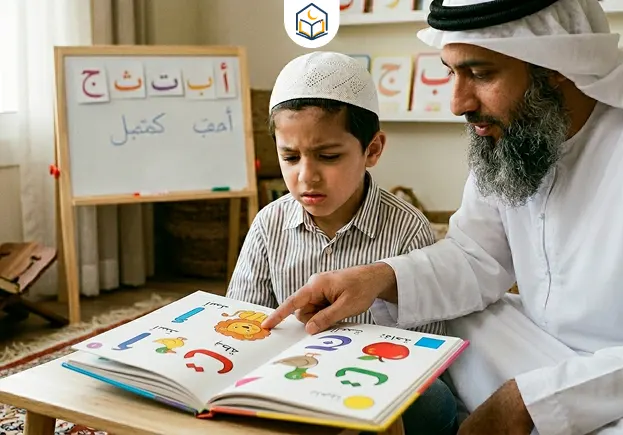
There’s a particular moment I see again and again in early lessons.
A child has memorised the shapes. They can sing the letters in order. They proudly say, “Alif, Baa, Taa…” without hesitation.

Many UK parents imagine something vague when they hear the phrase How Online Quran Classes Work. A child in front of a laptop. A teacher somewhere abroad. Perhaps reading a few verses. Maybe correcting mistakes.
But that picture is incomplete.
Flexible online Quran classes for kids and adults — taught by certified teachers in the UK.
Choose morning, evening, or weekend classes — whatever fits your routine.
Kids, adults, beginners, reverts — everyone is welcome.
Personalized lessons designed to match your goals.
Start with two free classes — no commitment needed.
