Flexible Scheduling
Choose morning, evening, or weekend classes — whatever fits your routine.

As a teacher, I often notice the same pattern: many Muslims in the UK fast faithfully every year, yet remain uncertain about the detailed rulings.
Questions arise about timing, what invalidates the fast, the correct approach to suhoor, or the difference between Taraweeh and Tahajjud.
These are not minor issues.
Worship built on uncertainty weakens confidence and, at times, correctness.
Ramadan deserves clarity.
Let us approach the first week with structured understanding rather than assumption.
Sincerity is essential in Islam. However, sincerity without knowledge can lead to mistakes.
In acts of worship, intention must be paired with correct practice.
Fasting in Ramadan is an obligation upon every adult Muslim who meets the conditions.
But the validity of the fast depends on fulfilling certain pillars and avoiding specific nullifiers.
This is where the fiqh of fasting becomes essential.
Many people say, “I’ve fasted for years; I know how it works.” Yet when asked basic questions — What exactly makes a fast valid? When must the intention be made? What if someone accidentally eats? — hesitation appears.
Clarity protects worship. Confusion weakens it.
To simplify matters, fasting in Ramadan rests upon clear pillars and conditions.
The fast must be accompanied by intention (niyyah).
This does not require verbal recitation. It is a firm resolve in the heart to fast for the sake of Allah.
For Ramadan, the majority of scholars state that intention should be made before Fajr each day.
In practice, if a person wakes for suhoor with the intention to fast, that suffices.
A common misunderstanding in the UK context is assuming that one intention at the start of Ramadan covers the entire month.
While some scholarly opinions allow this, it is safer and clearer to renew intention daily — even if only in the heart.
Fasting begins at true dawn (Fajr) and ends at sunset (Maghrib). Eating, drinking, and marital relations are prohibited during this window.
Timing errors are common during the first days of Ramadan, particularly with changing UK prayer timetables. Always verify reliable local prayer times.
Fasting is obligatory upon:
Understanding exemptions is part of knowledge — not weakness.

In the early days of Ramadan, suhoor often becomes rushed or neglected, especially with early Fajr times in the UK.
Yet the Prophet ﷺ emphasised the blessing in suhoor.
The suhoor sunnahs include:
Many assume suhoor must be a large meal. This is incorrect. Even a date and water fulfil the sunnah.
The benefits of suhoor are both spiritual and practical:
From a teacher’s perspective, one common issue is timing confusion. Some people stop eating 20–30 minutes before Fajr “just to be safe.” While caution is understandable, prayer timetables already account for true dawn. Unnecessary early stopping can create hardship, especially in years when fasting hours exceed 16–18 hours.
The correct approach: stop when Fajr begins — not long before it.

If suhoor sets the tone for intention, iftar sets the tone for gratitude.
The iftar etiquette includes:
In teaching situations, I often see the opposite: people delaying iftar unnecessarily, or rushing into heavy meals without reflection.
The sunnah is to break promptly at Maghrib, pray Maghrib, then continue eating calmly.
Among the well-known supplications is:
“Dhahaba adh-dhama’u wabtallatil-‘urooq wa thabatal-ajru in sha’ Allah.”
(“The thirst has gone, the veins are moistened, and the reward is confirmed, if Allah wills.”)
There are also other authentic supplications. The key is not memorising many versions, but understanding that this moment is spiritually significant. Dua at iftar is from the times when supplication is accepted.
Iftar is not merely physical relief. It is an act of worship that concludes a day of obedience.
This question arises repeatedly in the first week.
To keep matters clear and practical, the fast is invalidated by:
As a teacher, I emphasise balance: avoid obsessive doubts, but also avoid carelessness. Worship in Islam is not built on anxiety.
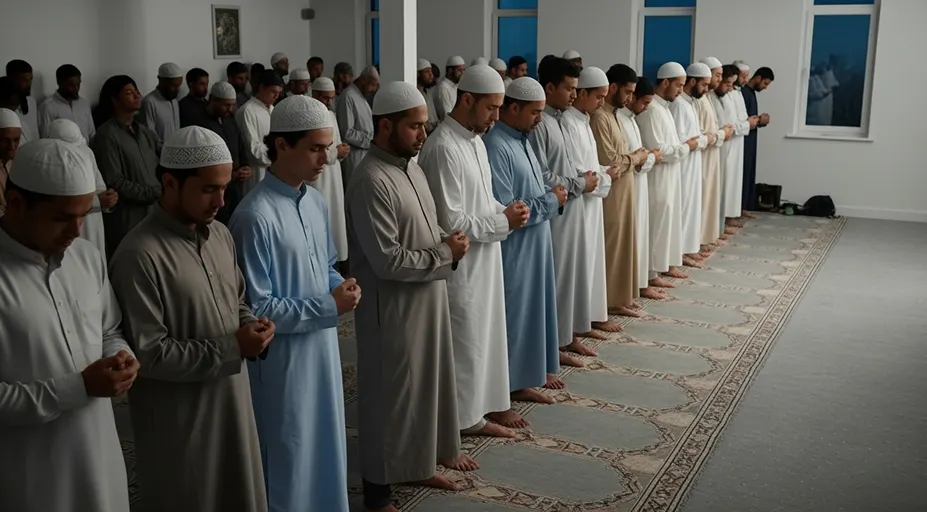
The first nights of Ramadan often bring another question: what exactly are the taraweeh prayer rules, and how do they differ from other night prayers?
Taraweeh is the congregational night prayer prayed after ‘Isha in Ramadan. It is a confirmed sunnah, not obligatory.
Key practical points:
In UK mosques, 20 rak‘ahs is common in many communities, while others pray 8. Both are valid according to scholarly traditions.
This confusion appears frequently.
In practice, Taraweeh is a form of Qiyam al-Layl specific to Ramadan. Tahajjud refers to late-night prayer after rest.
For working adults in the UK, consistency matters more than quantity. It is better to pray a manageable number of rak‘ahs with focus than to exhaust oneself and abandon the prayer mid-month.
The UK presents unique circumstances.
In certain years, fasting exceeds 17 hours. This intensifies the importance of:
Islam does not require self-harm. Managing health wisely is part of good practice.
Many Muslims balance full-time work, university, or school. Planning becomes essential:
While praying Taraweeh in congregation carries reward, those unable to attend due to work, childcare, or health may pray at home without guilt.
The aim is sustainability.
In teaching situations, the first week of Ramadan reveals a deeper issue: many misunderstandings stem from fragmented learning. People rely on social media posts or brief reminders rather than structured study.
If someone wishes to truly learn Islamic studies course , especially the rulings of worship, organised learning provides clarity that scattered information cannot.
This is why many Muslims today enrol in online Islamic courses to systematically understand fiqh, aqeedah, and daily rulings rather than depending on occasional advice.
For those seeking structured guidance in Quran recitation and foundational knowledge, programmes such as those offered by Study Quran at Home provide:
While worship requires personal effort, correct knowledge often requires guidance.
For deeper understanding of foundational rulings, you may explore our structured programme to Learn Islamic Studies, designed for clarity and practical application.
(For course structure reference, see service outline study quran at home – services….)
Fasting is not cultural repetition. It is regulated worship.
The fiqh of fasting ensures:
When worship is based on clarity, confidence replaces doubt. Ramadan becomes purposeful rather than routine.
The first week sets the standard for the month. Correct what needs correcting early. Ask questions. Study properly. Refine your practice.
Knowledge protects sincerity. And sincerity, guided by knowledge, perfects worship.
No. Intention is in the heart. Waking for suhoor with the intention to fast is sufficient.
No. If it was genuinely forgetful, your fast remains valid. Stop immediately once you remember.
Yes. Congregation is recommended but not obligatory. You may pray at home individually or with family.
No, as long as you do not intentionally swallow toothpaste or water.
Suhoor is not obligatory, but it is a highly emphasised sunnah with significant spiritual and physical benefits.
May this Ramadan be marked by clarity, correctness, and consistency. With knowledge, worship becomes stronger — and Ramadan becomes transformative rather than routine.
Begin your spiritual with personalized one-on-one classes from expert tutors.
Book a Free Trial Class
Learning Quran reading takes time, consistency, and proper guidance. This article explains realistic timelines for children and adults, the stages of Quran reading development, and how structured lessons and Tajweed correction help learners build confidence and fluency step by step.
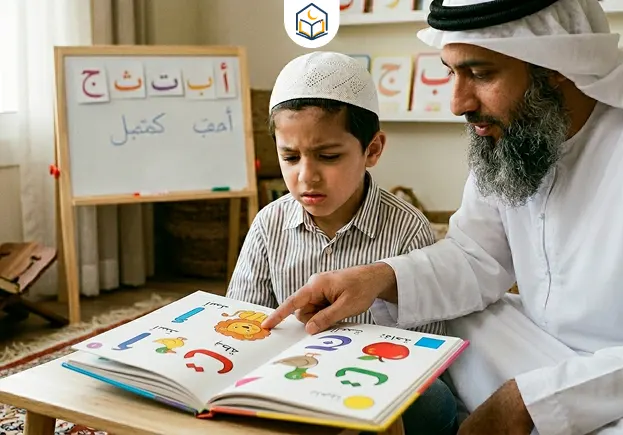
There’s a particular moment I see again and again in early lessons.
A child has memorised the shapes. They can sing the letters in order. They proudly say, “Alif, Baa, Taa…” without hesitation.

Many UK parents imagine something vague when they hear the phrase How Online Quran Classes Work. A child in front of a laptop. A teacher somewhere abroad. Perhaps reading a few verses. Maybe correcting mistakes.
But that picture is incomplete.
Flexible online Quran classes for kids and adults — taught by certified teachers in the UK.
Choose morning, evening, or weekend classes — whatever fits your routine.
Kids, adults, beginners, reverts — everyone is welcome.
Personalized lessons designed to match your goals.
Start with two free classes — no commitment needed.
